
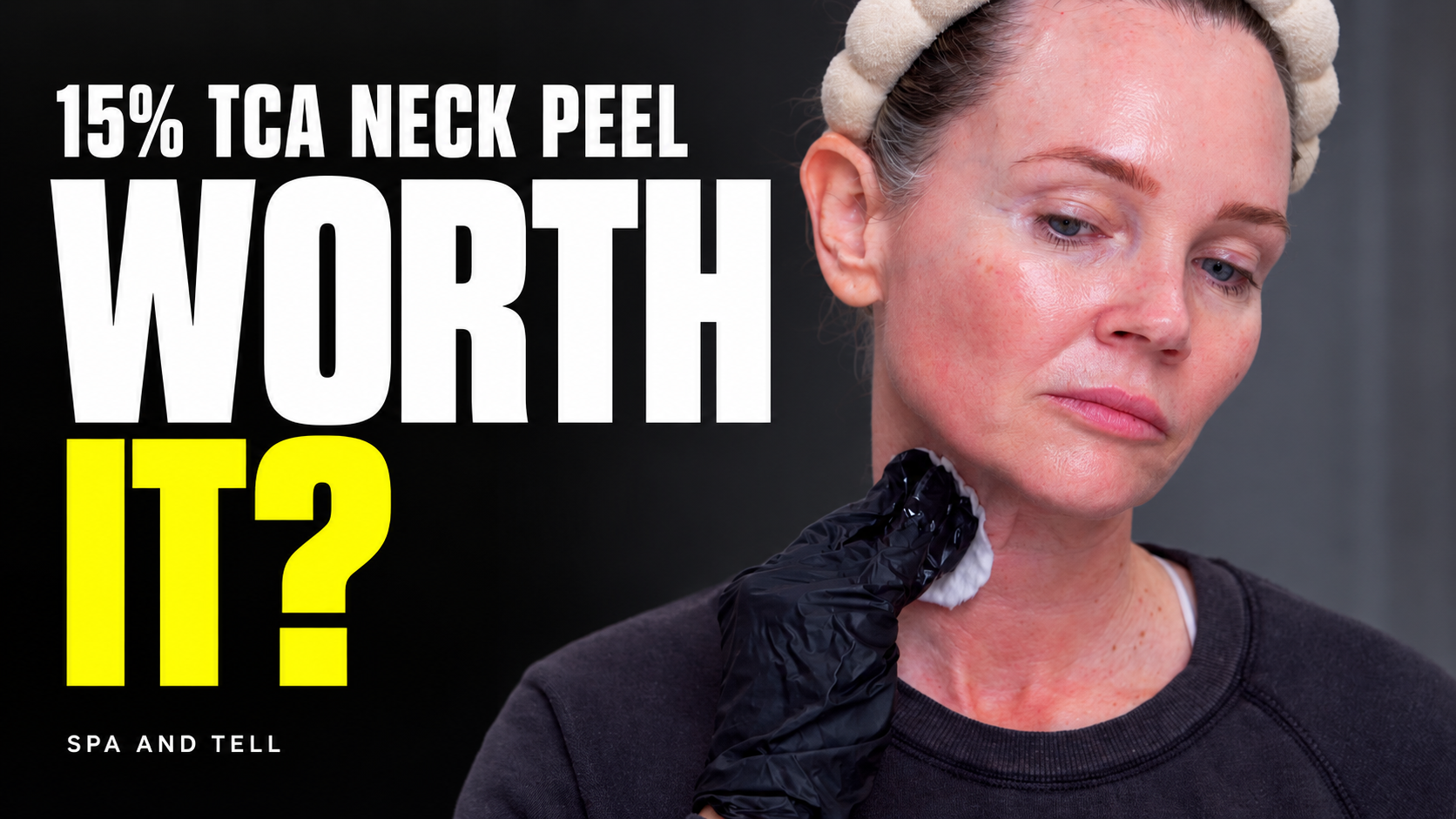
SPA AND TELL · RECOVERY DIARY
My neck peel took patience. Here’s what happened from the first morning through day 12—and why the recovery looked different from my face peels.
I’ve shared several TCA face peels, but this time I focused on my neck. I used 15% TCA, and the biggest part of the story turned out to be the wait afterward.
This wasn’t a peel that lifted away in dramatic sheets. My skin gradually became dry and tight, then shed in little flakes. By day nine, I was still dealing with it. At my day-12 check-in, the last sloughing near my collarbone had released.
Was it worth it to me? At the end of the video, I said yes. But that answer comes with the full recovery attached: discomfort, visible dryness, ongoing flaking, and more patience than my usual face-peel updates.
Watch the full video
Watch on YouTube for the original footage and recovery check-ins.
The number on the bottle didn’t tell the whole story
I chose a lower concentration than I’ve used in some of my face-peel videos because my neck feels more sensitive. Early in this session, I described relatively mild tingling. Later, my neck felt raw and very hot, and turning it was uncomfortable.
I also didn’t see the frosting I was looking for during the session. My skin still went on to peel. That is an observation about this experience—not a reason to keep applying acid until a particular visual change appears.
The FDA explains that concentration, the number of applications, and exposure time all affect how deeply a chemical peel can penetrate. “15%” alone doesn’t tell us the depth, predict the recovery, or prove safety.
My neck-peel recovery timeline
| Check-in | What I reported |
|---|---|
| First morning | The redness had faded and the heat was gone. I noticed some itching, but less tightness than I associate with my stronger face peels. |
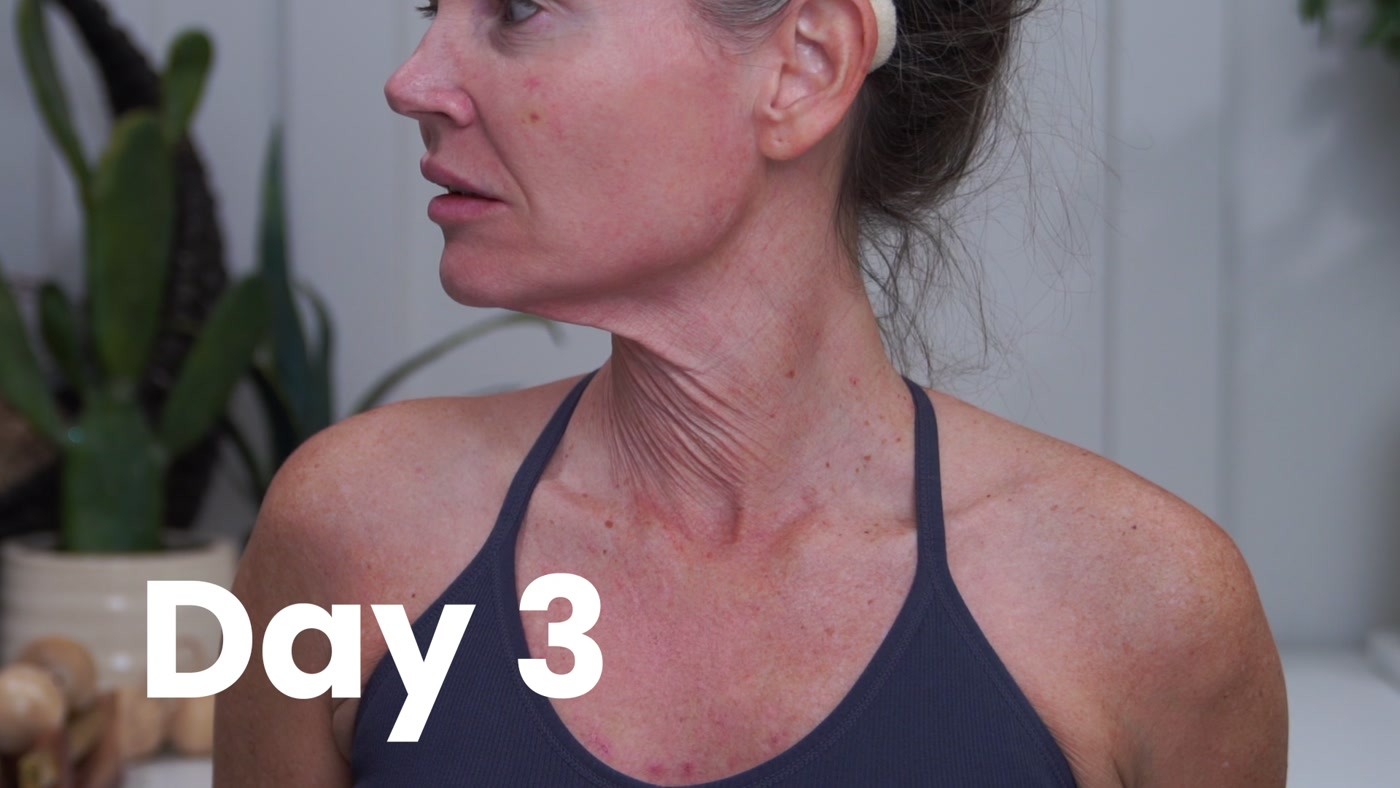
| Day 3 | No visible flaking yet. My skin felt dry, granular, and increasingly tight. |
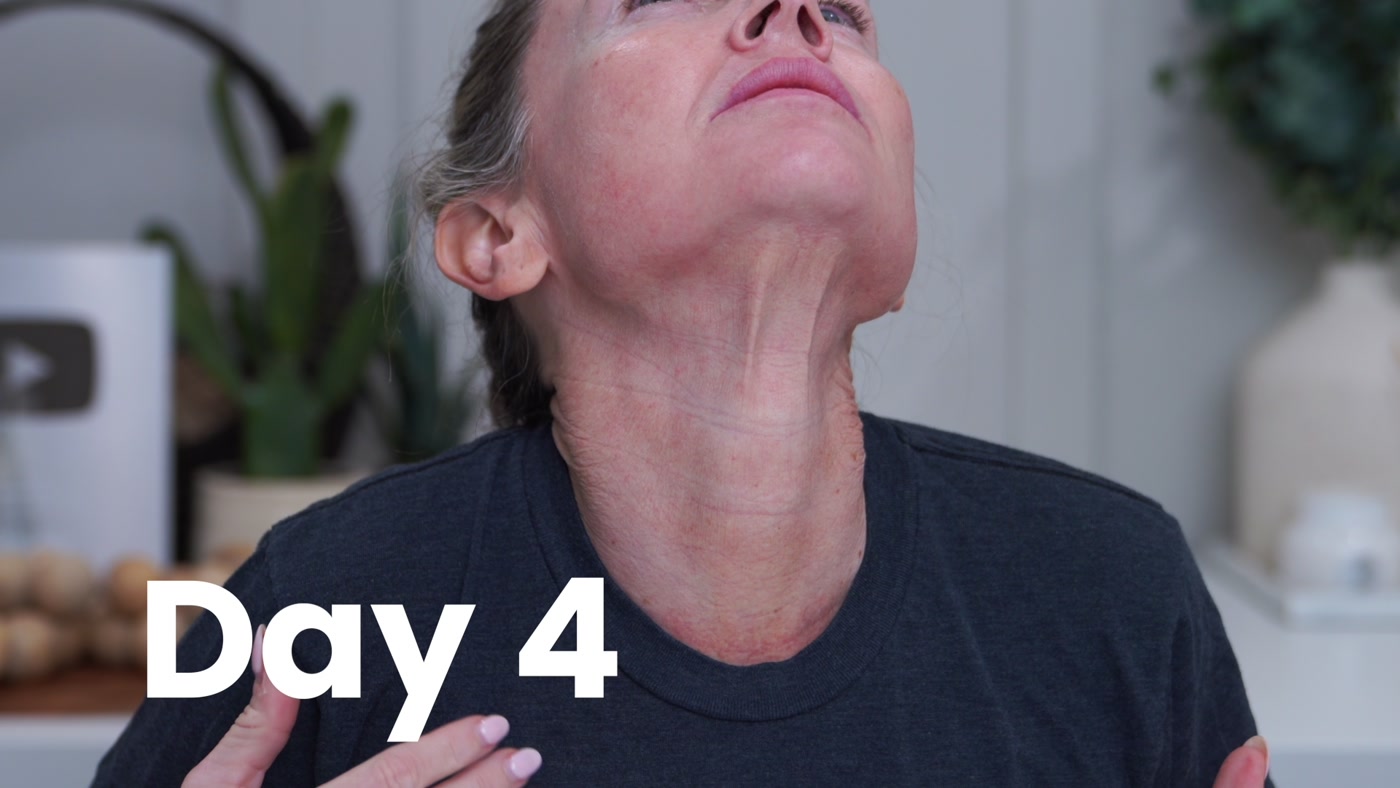
| Day 4 | I noticed the first lifting and sloughing beneath my jaw. The surface looked more crinkly. |
| Day 6 | My neck felt very dry, with little pieces of skin beginning to flake off. |
| Day 9 | The shedding was still going. Fine flakes had worked downward, and I reported breakouts around the jawline. |
| Day 12 | The final sloughing near my collarbone had released by the time of my update. |
These are my recorded check-ins, not a schedule someone else should expect to follow. I didn’t film a separate update for every day.
Small flakes made this feel like a longer recovery
When I think about my stronger face peels, I think about skin coming away in sheets. This neck peel looked different. The shedding was finer and slower, starting higher on my neck and gradually working downward.
By day nine, the flakes were small enough that I wasn’t sure the camera would show them clearly. My black sweater told a different story: I could see the little flakes on it. That was one of the less glamorous parts of the recovery.
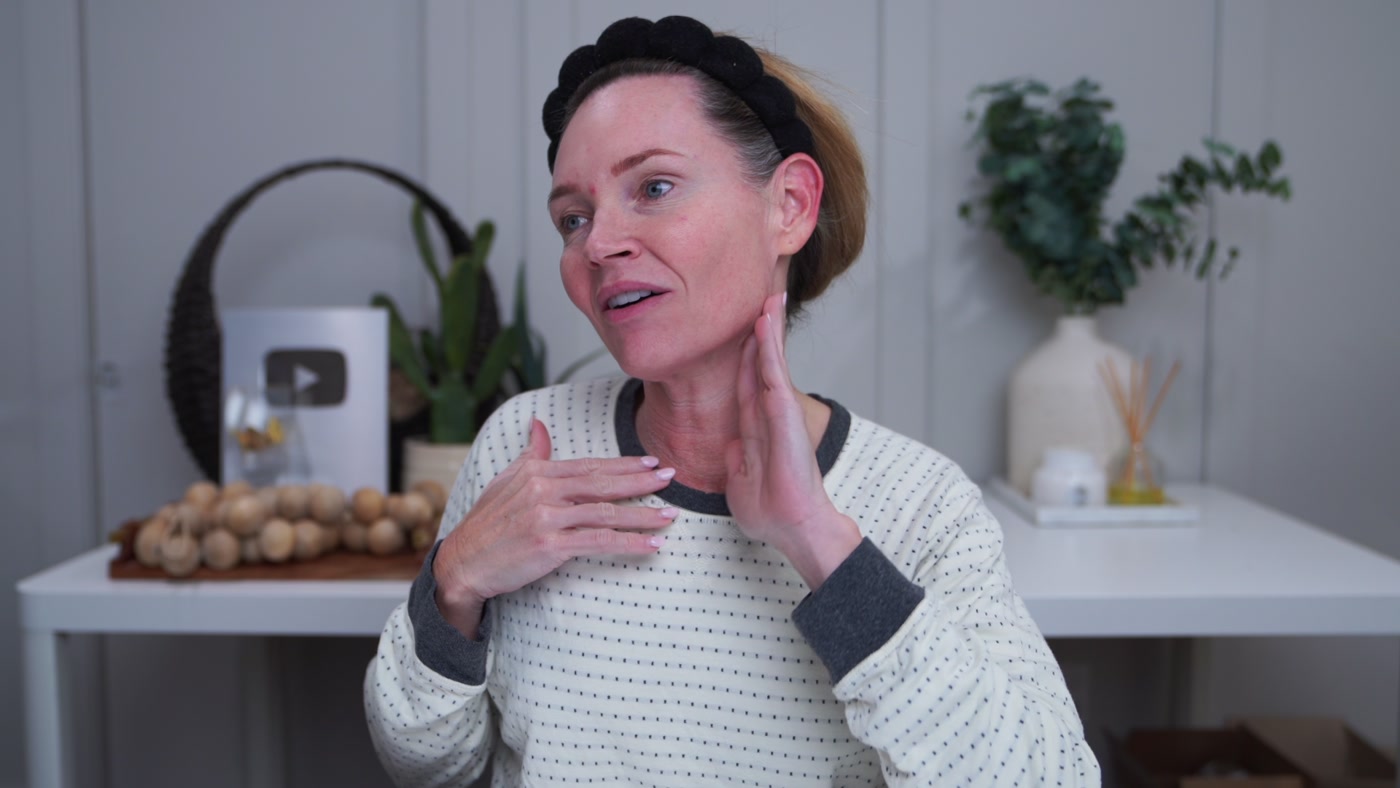
I also mentioned breakouts near the jawline. The video records that they happened, but it doesn’t establish whether the peel, an aftercare product, or another factor caused them.
Aftercare deserves its own conversation
In the footage, I show a first-aid cream and later Aquaphor or petroleum jelly. I also introduce tretinoin during the recovery. Those are choices I recorded, not a routine I can prescribe to someone else.
In particular, my use of tretinoin shouldn’t be read as advice to speed up peeling. Ask your treating clinician when it is appropriate to restart retinoids or other active products. The American Academy of Dermatology recommends following the aftercare plan for your specific peel, protecting the skin from the sun, and avoiding picking, rubbing, or scratching healing skin.
A recovery diary can show what a person experienced. It cannot replace an examination or tell you whether your own skin is healing normally.
So, was the recovery worth it?
For me, yes—that was my verdict at day 12. I was pleased to have the shedding behind me and felt positive about the experience overall.

In my closing thoughts, I talked about collagen, fine lines, and crepey-looking skin. Those are benefits I’m interested in, but this video doesn’t measure collagen or demonstrate lasting wrinkle improvement. Finishing the shedding phase and proving a long-term result are different things.
The clearest takeaway from this session is what I can actually document: my neck shed gradually, the recovery lasted longer than I hoped, and I still felt it had been worthwhile for me. If you’re weighing a peel, the downtime deserves just as much attention as the result you want.
Links mentioned with the video
Affiliate disclosure: I may earn a commission from purchases through my shopping links. The code below is listed in the video description; check current terms and availability.
- Makeup Artist’s Choice — the retailer linked under “Acid Peels” in the description; code KAOS20. This reference identifies the source, not a recommendation to perform a home TCA peel.
- My ShopMy shelf — my broader collection of skincare and product links.
The description does not provide exact shopping links for the first-aid cream or Aquaphor shown in the recovery footage.
Related viewing and sources
- My 30% TCA face-peel video — a separate experience, not a neck-treatment comparison.
- Years of Microneedling: What Changed—and What I Still Can’t Prove
- FDA: Chemical-peel safety warning
- AAD: Chemical-peel recovery and aftercare FAQs