
NATURAL KAOS · SPA AND TELL

After I shared my 60-day GHK-Cu experience, your comments raised a question that deserved its own investigation: Do you need to take zinc when using GHK-Cu?
Start looking for an answer, and you’ll find different explanations. Some creators describe zinc depletion as a consequence of GHK-Cu use. Others call the reasoning for supplementation theoretical. Still others discuss testing before deciding whether additional minerals are warranted.
Before adding another bottle to the cabinet, I wanted to understand what problem we’re trying to correct—and what evidence tells us that problem exists.
Watch the full GHK-Cu and zinc video on YouTube.
What Is GHK-Cu?
GHK is a small peptide made from glycine, histidine, and lysine. When it binds copper, the resulting complex is called GHK-Cu.
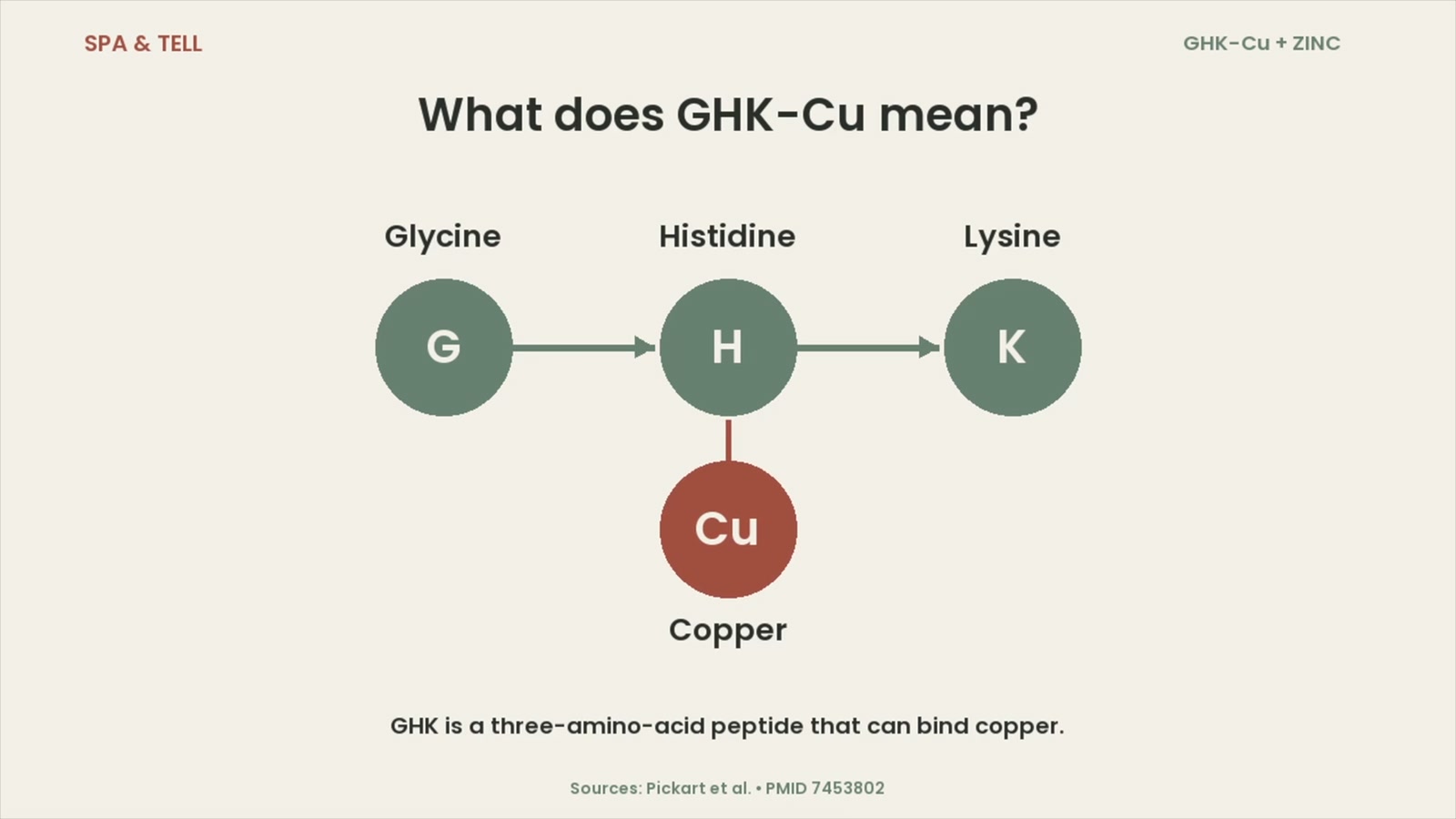
Part of the interest comes from laboratory research. One study found that GHK-Cu stimulated collagen synthesis in cultured fibroblasts. That helps explain why researchers study it, but it doesn’t establish what benefits a person will get from an injection or whether zinc should accompany it. Read the original laboratory study.
What We Know About Zinc and Copper
Excessive zinc intake can interfere with copper absorption. That finding alone does not establish the reverse claim that using GHK-Cu automatically depletes zinc. NIH explains the zinc–copper interaction.
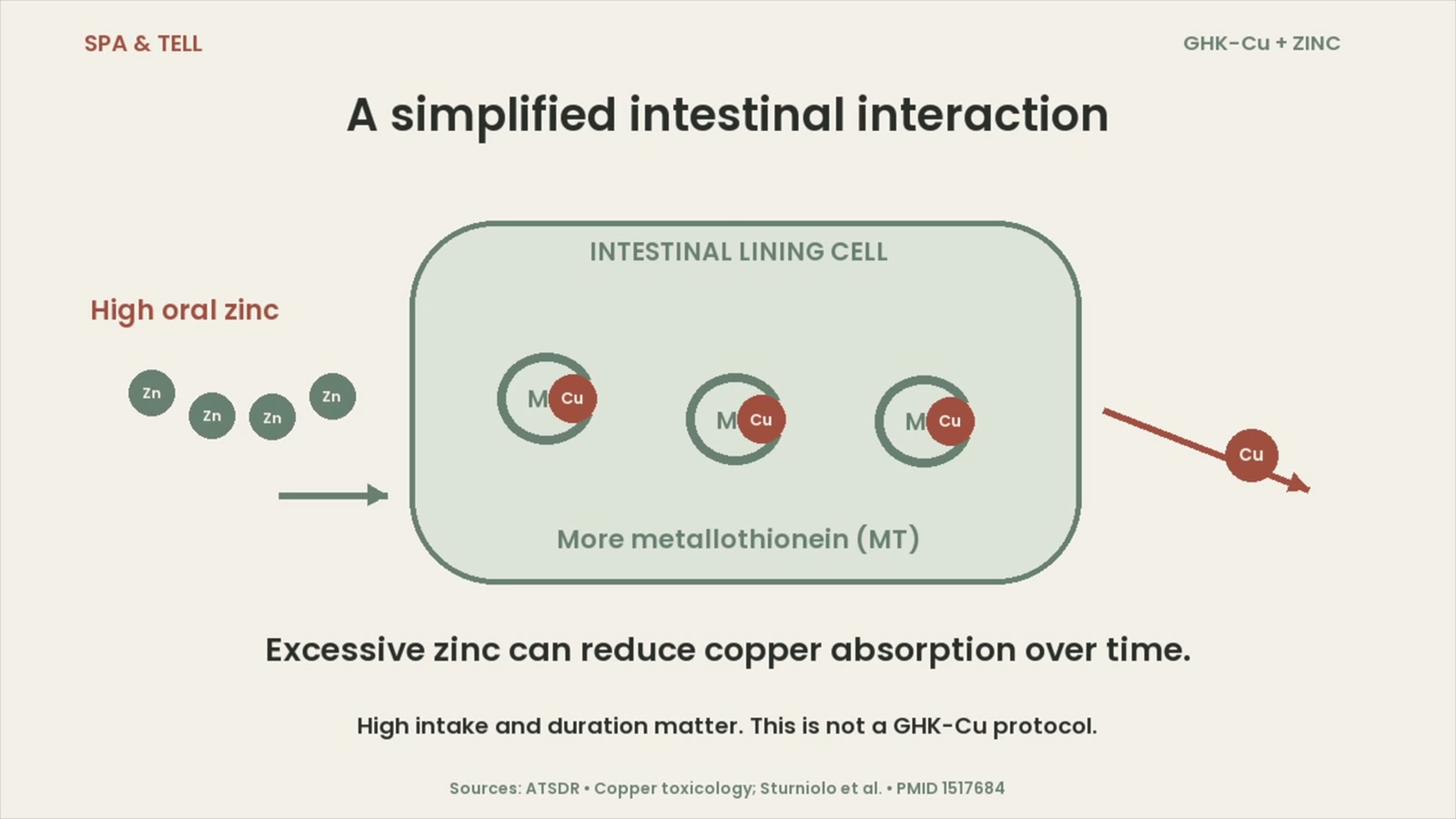
To support an automatic supplement recommendation, we would need evidence showing a meaningful zinc problem in GHK-Cu users and demonstrating that adding zinc helps. In the material reviewed for my video, that direct human evidence was not identified. This was a focused review of selected sources, not an exhaustive search of every study.
Why the Advice Sounds So Different
In the video, I compare discussions from Jacob Nachinson, Dr. Ashley Froese, Dr. Alex Tatem, Quinn Stillson, MD, and Dr. Jones, DC. Their explanations range from personal routines and claims about depletion to a theoretical rationale and an approach based on individual assessment.

Those distinctions can disappear when a longer discussion becomes a short piece of advice. Someone describes a possible concern, and by the time it reaches a comment section, it sounds like something everyone must do.
I keep coming back to four questions: Was a problem measured? Does the evidence apply to this route of use? Was supplementation shown to help? Is the speaker describing personal practice, a theory, or a demonstrated requirement?
A Serum, a Supplement, and an Injection Are Different Exposures
A topical skincare product, an oral supplement, and an injection interact with the body differently. An intestinal absorption mechanism cannot, by itself, tell us how a topical product or injection affects mineral status. We need evidence relevant to that route.
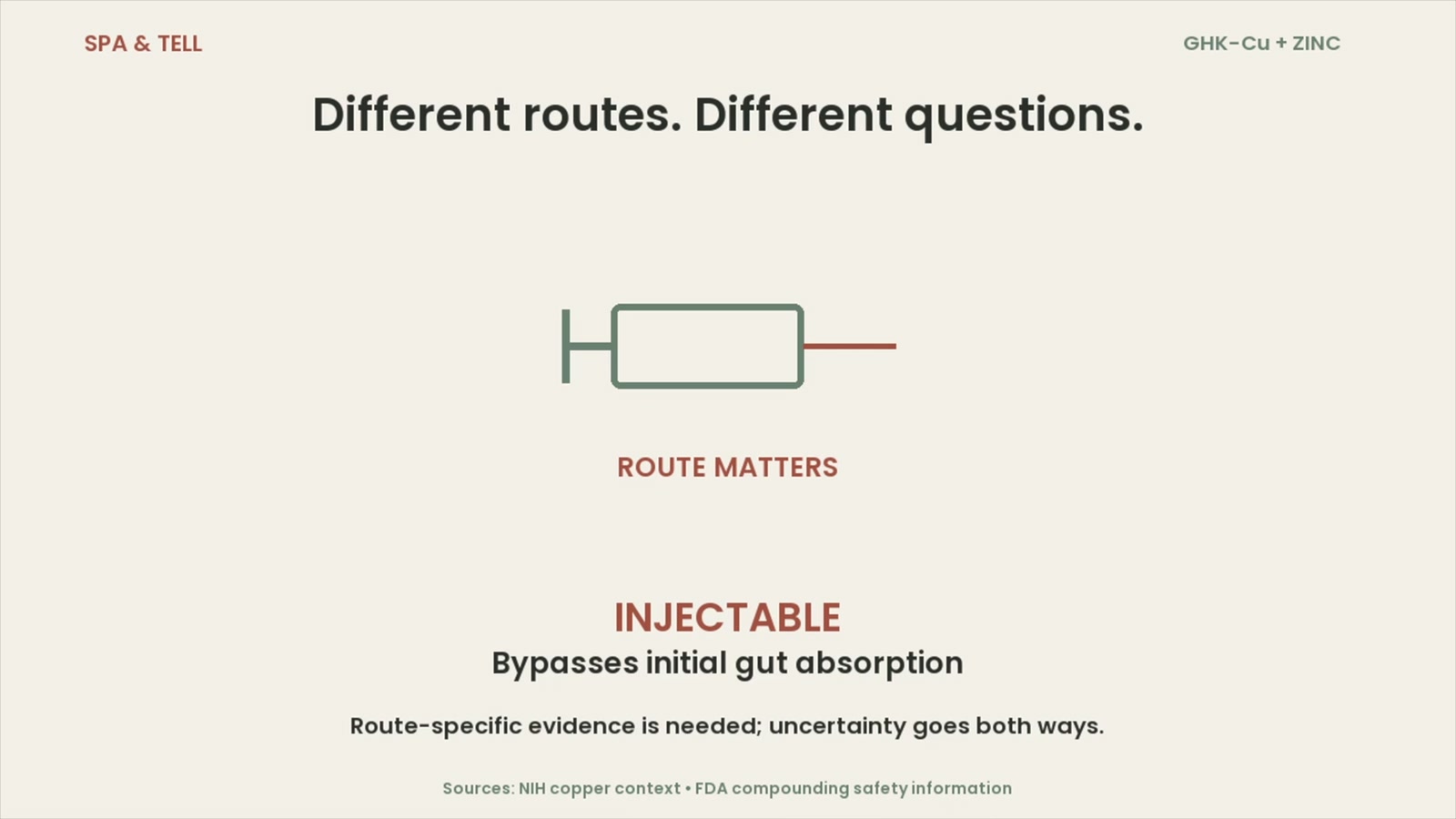
FDA identifies limited human safety data and potential immune-reaction risks associated with aggregation and impurities in compounded injectable GHK-Cu. The sources reviewed here do not establish zinc as a solution to those concerns. Read FDA’s safety information.
Why “Just Add Zinc” Deserves a Closer Look
Adding a supplement changes your total intake. Food, a multivitamin, and a separate zinc product can all contribute. NIH zinc guidance.
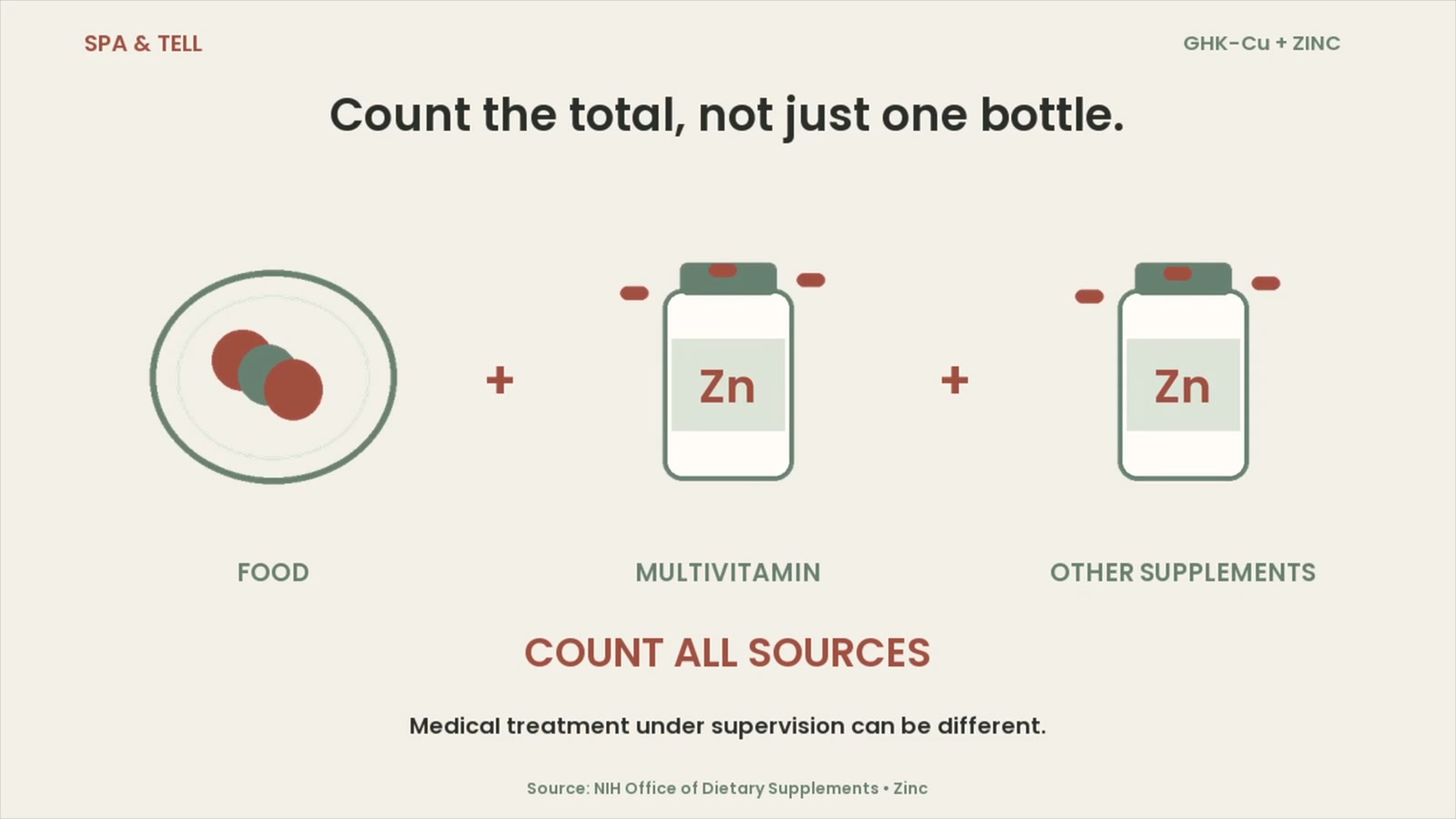
An individual may have a valid reason for supplementation. That decision needs their dietary and medical context rather than another person’s routine.
What I’m Taking Away From This Discussion
Your comments encouraged me to examine an assumption that gets repeated often. After reviewing these sources, I don’t have evidence supporting an automatic zinc requirement for everyone using GHK-Cu. I also haven’t established that nobody needs additional zinc.
For me, the useful question is: What evidence shows that this addition is needed? If you know of a human study directly examining GHK-Cu and zinc supplementation, share the study title or link in the comments.
Frequently Asked Questions About GHK-Cu and Zinc
Do you need to take zinc with GHK-Cu?
The sources reviewed for this video did not establish that everyone using GHK-Cu needs extra zinc. An individual may have a separate nutritional or medical reason for supplementation; that decision needs their own clinical context.
Does GHK-Cu deplete zinc?
This review did not identify direct human evidence establishing GHK-Cu-related zinc depletion as a universal problem. That does not prove mineral levels can never be affected. The route, exposure, and individual circumstances still matter.
Can too much zinc affect copper levels?
Yes. Excessive zinc intake can reduce copper absorption and contribute to copper deficiency. The amount and duration matter. Source: NIH.
How much zinc should you take with GHK-Cu?
This review does not establish a zinc dose to pair with GHK-Cu. NIH lists 40 mg daily from food and supplements as the adult upper intake limit, not a target. Medically supervised treatment can differ. Source: NIH.
Does topical GHK-Cu require a zinc supplement?
The sources reviewed here do not establish an automatic zinc requirement for topical GHK-Cu. Evidence about oral mineral absorption or injections cannot simply be applied to a skincare serum.
Does adding zinc make injectable GHK-Cu safe?
Adding zinc has not been established here as a way to resolve injectable GHK-Cu safety concerns. FDA identifies limited human safety data and potential immune-reaction risks associated with aggregation and peptide-related impurities. Source: FDA.
Where can I watch Kim’s earlier GHK-Cu videos?
Watch My 60-Day GHK-Cu Experience and GHK Cu Questions Answered: Cycling, Zinc, Side Effects & What We Actually Know. Both are linked in the related-video section of this article.
Continue the Conversation
Watch the full discussion on Spa and Tell, revisit my 60-day diary, or watch my GHK-Cu questions answered video.
Medical Disclaimer
This article shares personal experience and educational commentary. It is not medical advice or a dosing protocol. Discuss peptide use, supplements, and individual testing with a qualified healthcare professional.