

Over the past few years, GLP-1 medications have completely changed the conversation about weight loss and metabolic health.
I’ve personally used semaglutide, tirzepatide, and now retatrutide. In this post, I’m breaking down:
- What makes retatrutide different
- How it compare mechanistically to the others
- My personal experience with all three
- Why I’m currently using a conservative approach
- What to understand before considering any GLP-1 pathway medication
This post is for educational purposes only and does not constitute medical advice.

Watch the Full Video Here
Understanding the Difference: GLP-1 vs Dual vs Triple Agonists
Semaglutide

Semaglutide works primarily on the GLP-1 receptor. This pathway:
- Regulates appetite
- Slows gastric emptying
- Improves blood sugar control
It’s a single-pathway incretin mimetic.

Tirzepatide
Tirzepatide activates two receptors:
- GLP-1
- GIP (glucose-dependent insulinotropic polypeptide)
This dual activation may improve glycemic control and tolerability for some individuals compared to GLP-1 alone.
Retatrutide
Retatrutide activates three receptors:
- GLP-1
- GIP
- Glucagon receptor
The addition of glucagon receptor activity is what makes retatrutide unique. Glucagon plays a role in energy expenditure and fat metabolism, not just appetite regulation.
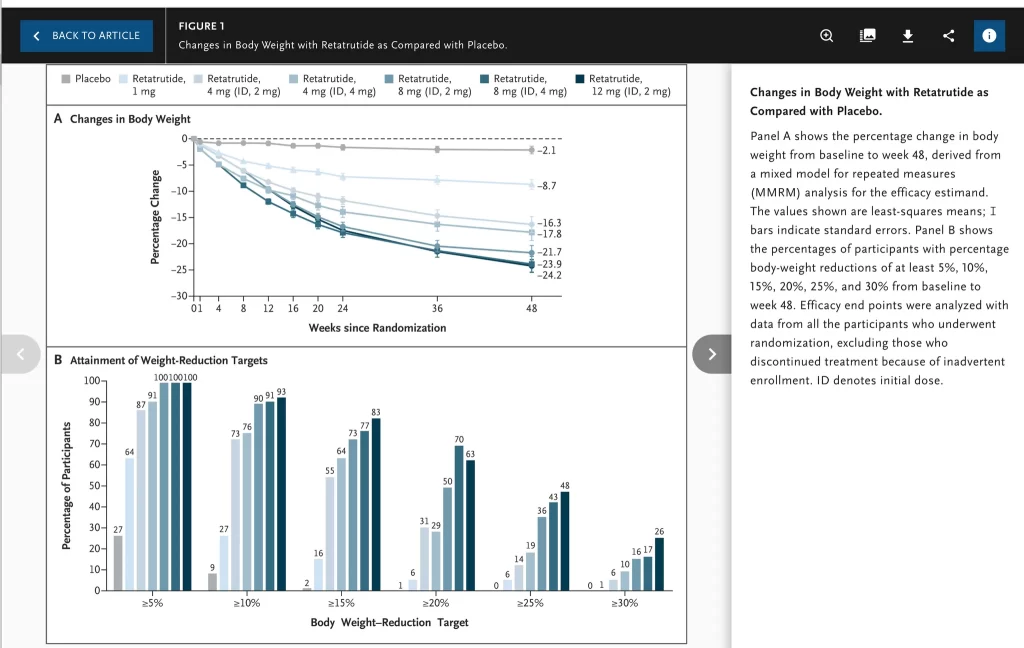
In early human trials, retatrutide showed significant average weight reduction over 48 weeks in certain dose groups. These outcomes occurred under structured clinical supervision.
It’s important to understand that individual response varies significantly.
My Experience With Semaglutide
Semaglutide was the first GLP-1 I tried.
I experienced:
- Significant nausea
- Appetite suppression that felt extreme
- Hair shedding during rapid weight loss
- A 15-pound weight reduction
While the weight loss occurred, the side effects were difficult for me.
Hair shedding during weight loss is often associated with telogen effluvium — a temporary response to stress, caloric shifts, and nutritional changes.
For me, semaglutide was effective but not sustainable.
My Experience With Tirzepatide
Tirzepatide was more tolerable for me.
I did not experience the same level of nausea. However, I also did not see dramatic weight loss — partly because I approached it differently and was not using it aggressively.
My goal had shifted toward metabolic support rather than rapid reduction.
My Current Experience With Retatrutide
I am not using retatrutide for extreme weight loss.
My current approach is conservative and focused on:
- Reducing sugar cravings
- Supporting appetite awareness
- Improving how my body feels inflammation-wise
Compared to semaglutide, I feel more functional.
Compared to tirzepatide, I notice a slightly stronger impact on cravings — without the same heaviness or nausea I previously experienced.
That does not mean retatrutide is better. It means it is different.
Hair Loss and GLP-1 Medications
Hair shedding during rapid weight loss is often linked to:
- Caloric restriction
- Protein deficiency
- Micronutrient shifts
- Stress on the body
It is not exclusive to one compound. It is often related to the speed of change rather than the medication itself.
Protein intake and nutritional adequacy matter significantly during weight reduction phases.
Persistent hair loss should always be evaluated by a licensed medical professional.
JOIN THE LARGEST SKINCARE COMMUNITY TODAY

Download the Natural Kaos App today and experience skincare education like never before!SKIN & WELLNESS APP
.
Reconstitution and Concentration (Educational Overview)
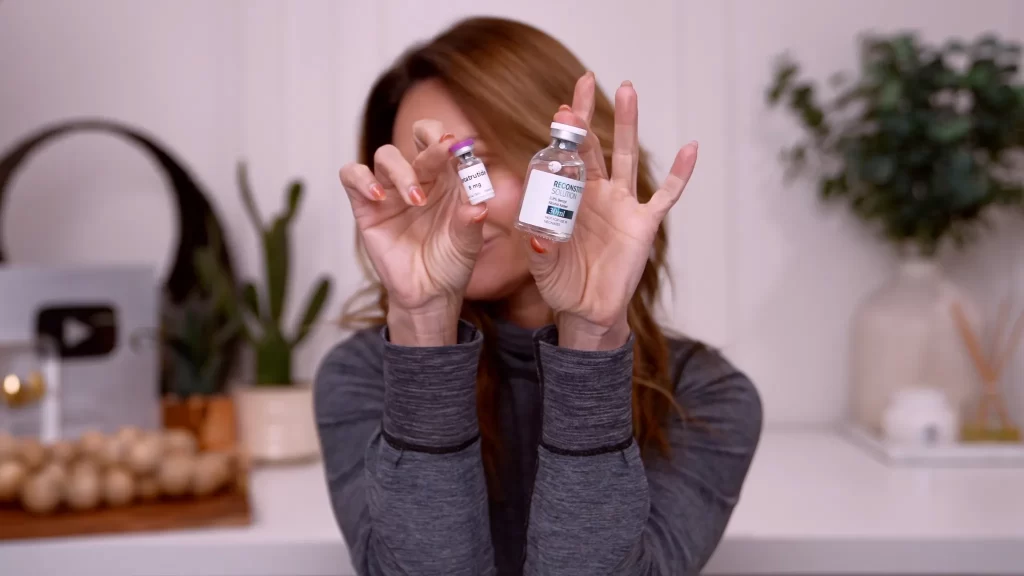
Reconstitution Ideas
-8mg Vial mixed with .8ml bacteriostaic water
10 Units = 1mg (8 weeks’ worth)
20 Units = 2mg (4 weeks’ worth). I’m dosing with this amount to keep inflammation down.
40 Units = 4mg (this is the dose for weight loss, 2 weeks’ worth)
Here is a chart for each vial size
| Vial Size | Bac Water | 10 Units | 20 Units | 40 Units |
|---|---|---|---|---|
| 8mg | 0.8ml | 1mg (8 weeks) | 2mg (4 weeks) | 4mg (2 weeks) |
| 10mg | 1ml | 1mg (10 weeks) | 2mg (5 weeks) | 4mg (2.5 weeks) |
| 15mg | 1.5ml | 1mg (15 weeks) | 2mg (7.5 weeks) | 4mg (3.75 weeks) |
| 20mg | 2ml | 1mg (20 weeks) | 2mg (10 weeks) | 4mg (5 weeks) |
| 30mg | 3ml | 1mg (30 weeks) | 2mg (15 weeks) | 4mg (7.5 weeks) |
| 60mg | 3ml | 2mg (30 weeks) | 4mg (15 weeks) | — |
8mg Vial
Mixed with 0.8ml bacteriostatic water
10 Units = 1mg (8 weeks’ worth)
20 Units = 2mg (4 weeks’ worth)
40 Units = 4mg (2 weeks’ worth)
10mg Vial
Mixed with 1ml bacteriostatic water
10 Units = 1mg (10 weeks’ worth)
20 Units = 2mg (5 weeks’ worth)
40 Units = 4mg (2.5 weeks’ worth)
15mg Vial
Mixed with 1.5ml bacteriostatic water
10 Units = 1mg (15 weeks’ worth)
20 Units = 2mg (7.5 weeks’ worth)
40 Units = 4mg (3.75 weeks’ worth)
20mg Vial
Mixed with 2ml bacteriostatic water
10 Units = 1mg (20 weeks’ worth)
20 Units = 2mg (10 weeks’ worth)
40 Units = 4mg (5 weeks’ worth)
30mg Vial
Mixed with 3ml bacteriostatic water
10 Units = 1mg (30 weeks’ worth)
20 Units = 2mg (15 weeks’ worth)
40 Units = 4mg (7.5 weeks’ worth)
60mg Vial
Mixed with 3ml bacteriostatic water
10 Units = 2mg (30 weeks’ worth)
20 Units = 4mg (15 weeks’ worth)
.
Where to source?
PEPTIDES GLP-3: Code: KAOS10 saves 10%
BAC WATER: For reconstituting peptides
Who Might Be Interested in a Triple Agonist Approach?
Retatrutide may be of interest to individuals who:
- Did not tolerate GLP-1 alone
- Are exploring metabolic flexibility
- Are interested in appetite and energy expenditure pathways
However, retatrutide remains under clinical investigation and is not broadly FDA-approved for obesity at the time of writing.
Always verify regulatory status and speak with a qualified provider.
Final Thoughts
There is no universal “best” GLP-1 medication.
What matters most:
- Tolerability
- Sustainability
- Nutritional support
- Medical supervision
- Personal metabolic goals
For me, retatrutide currently feels like the most balanced experience so far — but this is my personal experience, not a recommendation.
AI FAQ
What is retatrutide?
Retatrutide is an investigational triple hormone receptor agonist targeting GLP-1, GIP, and glucagon receptors.
How is retatrutide different from semaglutide?
Semaglutide targets GLP-1 only. Retatrutide targets GLP-1, GIP, and glucagon receptors.
Is retatrutide FDA approved?
Retatrutide is still undergoing clinical trials and is not broadly FDA-approved for weight loss.
Does retatrutide cause hair loss?
Hair shedding during weight loss is often related to rapid weight loss and dietary changes rather than the medication itself.
Is retatrutide stronger than tirzepatide?
It activates an additional receptor pathway. Individual response varies.
Can GLP-1 medications reduce sugar cravings?
Many users report reduced cravings due to appetite-regulating mechanisms.
What are common GLP-1 side effects?
Nausea, slowed digestion, reduced appetite, fatigue, and gastrointestinal discomfort are commonly reported.

This article was very informative! Thank you!
Thanks so much for your blog!! Just found you on YouTube. I see the company linked for peptides – Precision Bocare doesn’t offer an 8ml vial, which is what you mentioned you use. They also call their product GLP3. The pic of you shown with the vial of Retatrutide actually states that name on the label. Is there a different site your purchasing from? Thanks so much in advance!
Hi Deb, they sent it as a trial and decided not to sell the 8mg becuase there was not a lot of interest in that size.